Your team may generate many new contacts every week. But which of them are actually worth your time? Lead qualification helps you answer that question and focus on the people who are most likely to become customers.
What exactly does lead qualification mean
A new lead fills out your form. What should happen next? Should sales call them right away, should marketing nurture them, or should you wait until you know more?
Lead qualification is the process of deciding whether a prospect is a good match for your business. You look at the company, the person’s role, their problem, and any signs that they may be ready to buy.
How business lead qualification ensures success
Good qualification helps your team avoid random outreach. Instead of treating every contact the same way, you build a sequence that shows who deserves attention first.
Here is how that sequence usually leads to better business results:
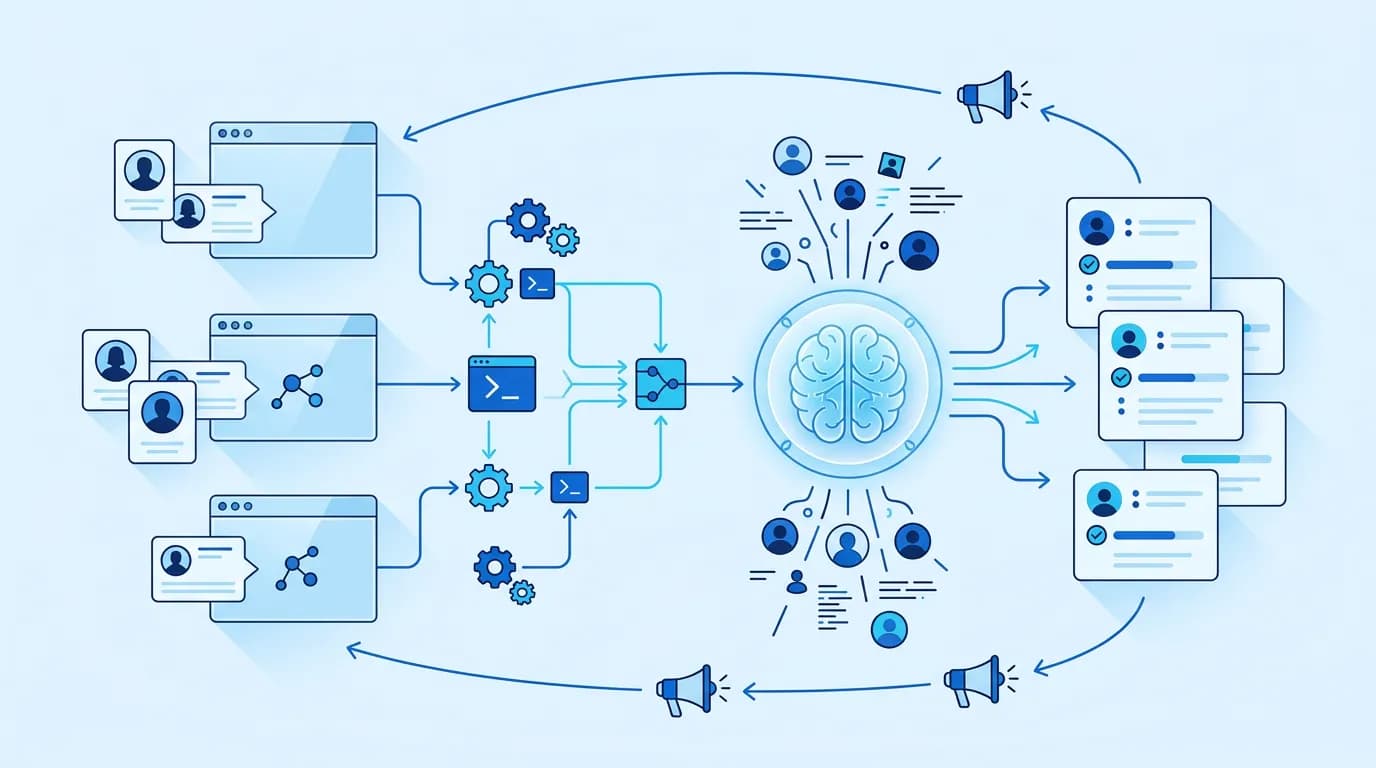
You collect leads from forms, social media, referrals, or outbound research.
You check whether the contact and company data are complete.
You compare each lead with your target audience criteria.
You look for intent signals, such as a pricing request or a clear business pain point.
You score the lead and decide what should happen next.
You send strong leads to sales and weaker ones to nurturing.
The result? More focused pipeline.
How to choose the right audience for leads
Before you search for leads, ask one simple question: who gets the clearest value from your product?
That answer becomes your ideal customer profile, or ICP. In simple words, it is a description of the companies and people who are most likely to benefit from what you offer.
Useful criteria include:
Industry.
Company size.
Region or country.
Job title and seniority.
Team structure.
Current tools and workflows.
Main business problem.
Budget potential.
Purchase timeline.
Signs of active demand.
The logic is usually similar across industries. You still need to find the right company, the right person, and the right moment. What changes is the exact signal that tells you a lead is promising.
Business area
Audience specifics
Lead generation specifics
E-commerce
Store owners and operations teams managing products, orders, suppliers, and marketplaces.
Search for stores with scaling issues, regional growth, catalog expansion, or pricing complexity.
App development
Founders, product managers, CTOs, and startup teams building web or mobile products.
Look for launch signals, funding, hiring, product updates, and technical workflow discussions.
SaaS
Revenue, operations, and technical teams trying to connect tools and reduce manual work.
Prioritize companies discussing integrations, automation, growth bottlenecks, or process inefficiency.
Marketing agencies
Agency owners and delivery teams handling many clients and repeated campaign tasks.
Find agencies offering lead generation, paid media, reporting, or multi-channel execution.
Logistics
Operations leaders coordinating shipments, inventory, vendors, and customer communication.
Focus on businesses with distributed workflows, tracking needs, or scaling delivery operations.
Professional services
Partners and managers selling consultations, expertise, and project-based services.
Search for firms with complex intake, booking, follow-up, or document-heavy processes.
How to qualify a lead for your business
When you review a lead, ask four simple questions.
Does this company fit your market?
Do they have a real problem?
Can this person influence the purchase?
Is there a reason to act soon?
This is the core of lead qualification. Some teams use BANT, others use custom scoring. The exact model can differ, but the goal is always the same: help your team make better decisions faster.
Explore lead qualification steps
Lead qualification works best when it follows a clear path. Each step should give you more context and help you decide what to do next.
Search for leads on social media
Social media can show early signs of demand. Is a company hiring operations managers? Are they talking about manual processes? Are they expanding into new markets or discussing automation?
LinkedIn is especially useful for B2B lead research. But do not search only by job title. Combine role, company size, location, industry, and recent activity.
For example, a Head of Growth at a 20-person SaaS company may need a workflow tool right now. A Head of Growth at a huge enterprise may not have the same buying power or urgency.
A simple search process looks like this:
Choose your target industry.
Filter by company size.
Identify decision-makers or strong influencers.
Look for relevant business signals.
Save the most promising profiles for the next step.
Collect relevant data: contacts, occupations, etc.
Now ask yourself: what data will actually help your team decide?
A good lead record should make qualification easier, not create more admin work. If a data point will not affect your score, outreach, or routing, you may not need it.
Useful data points include:
Full name.
Job title.
Company name.
Website.
Industry.
Location.
Business email or contact channel.
Company size.
Current tools or workflows.
Stated pain point.
Source of the lead.
Signs of engagement.
For example, “uses several disconnected tools and wants to automate reporting” is much more useful than a vague company description. It gives your sales team a real starting point.
Score this data based on your actual TA
A lead score should reflect your real target audience, not a generic template. Ask yourself: what do your best customers usually have in common?
For a workflow automation product, strong signals may include repeated manual work, several disconnected tools, operational complexity, and a clear need for AI workflows.
This does not predict the future. It helps your team decide who deserves attention first. Later, you can adjust the weights based on real results.
Let LLMs summarize the data
This is where AI becomes especially useful. Many lead records contain messy or incomplete information. You may have form answers, company descriptions, social posts, scraped data, or internal notes. Reading all of that manually takes time.
So what can an LLM do here? It can summarize the evidence, highlight missing information, and suggest a next step.
Use a prompt like this:
The prompt for LLM-assisted lead qualification
Evaluate this B2B lead against the ICP and scoring rules provided.

Use only the supplied data. Do not make assumptions.

Return valid JSON with:

- total_score

- lead_tier

- fit_evidence

- intent_evidence

- missing_information

- disqualifiers

- recommended_next_action

- suggested_personalization_angle
This is important: do not ask the model to “guess” whether somebody is a good lead. Ask it to compare the data with your rules and explain the result.
For example, an LLM may notice that a prospect mentioned CRM problems, data sync issues, and slow internal approvals. That can help you classify the lead as a good match for workflow automation.
Route each lead further and reach out
Now you have a score. What should happen next?
This is where routing matters. A good lead qualification process does not stop at analysis. It turns analysis into action.
A practical routing logic may look like this:
Sales-qualified leads: assign an owner, update the CRM, alert the team, and offer a call or demo.
Marketing-qualified leads: add them to a nurturing sequence based on their use case or industry.
Needs-review leads: send them to a manual review queue or request missing information.
Not-a-fit leads: save the reason and avoid wasting sales time on irrelevant outreach.
Then use the results from real outreach to improve the workflow. Which leads replied? Which ones booked a meeting? Which ones were clearly a poor fit? Those outcomes can improve your prompts and scoring logic over time.
How to qualify leads using ScriptRun with proxies
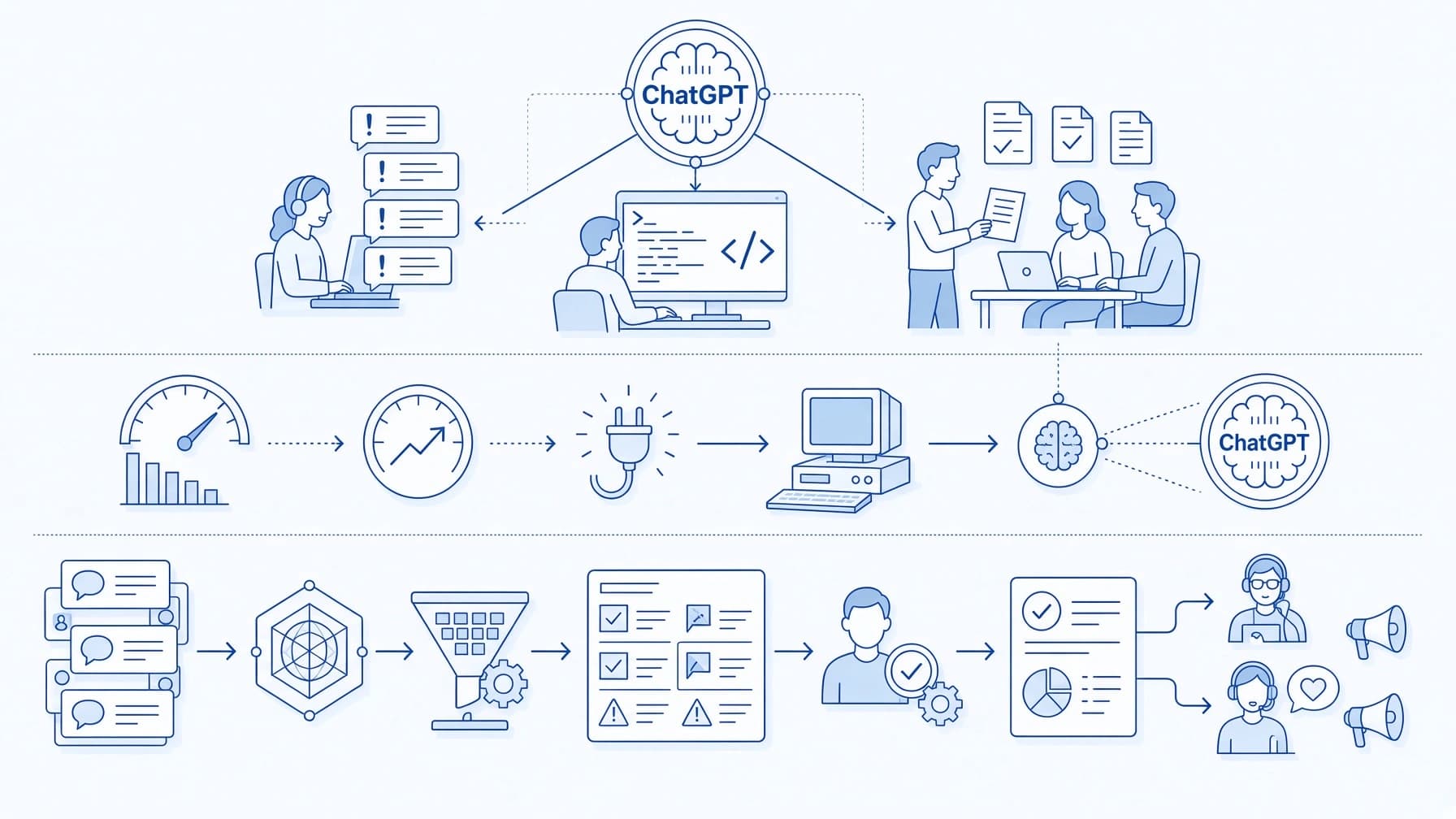
ScriptRun can turn lead qualification into a connected workflow:
Receive a lead through a webhook
Validate and normalize its data
Collect permitted public business information
Score the record, send it to an LLM through a selected API
Return structured results for CRM updates and routing
Its workflow logic makes it possible to separate hot leads, nurture candidates, and records requiring human review.
For proxy-friendly public-data collection, use ScriptRun’s own proxies as an optional infrastructure layer for stable, region-aware requests to approved public sources and APIs.
ℹ️ Respect rate limits, website terms, privacy obligations, and access restrictions; a proxy should support reliable operations, not bypass controls.
Define your ICP before building any automation, so your workflow reflects real business priorities.
Score verified signals, not assumptions, especially when you work with incomplete public data.
Keep AI output structured, so sales and operations teams can review decisions quickly.
Create a human-review path for unclear, high-value, or conflicting lead records.
Update your scoring rules regularly based on meetings, pipeline, and closed deals.
Conclusion
Lead qualification helps your team spend time where it matters most. Instead of chasing every new contact, you build a process that shows who fits your product, who has a real need, and what action makes sense next. With the right workflow, this process becomes faster, clearer, and easier to scale.
¿Útil?
¡Comparte este artículo!
Crea workflows de IA en minutos
Crea automatizaciones, conecta APIs y accede a más de 50 modelos de IA desde una sola plataforma.
Crea automatizaciones, conecta APIs y accede a más de 50 modelos de IA desde una sola plataforma.
Constructor visual de workflows
API compatible con OpenAI
Mercado de workflows y plantillas
Empieza gratis, planes desde $5
FAQ about how to qualify a lead
What does it mean to qualify a lead?
It means checking whether a prospect fits your target audience, has a relevant need, and is worth the next sales or marketing action. The goal is to focus attention on the most promising opportunities.
How do you qualify a lead in sales?
Start with company and contact data. Then check fit, business pain, role, urgency, and engagement. After that, score the lead and decide whether to contact, nurture, review, or reject it.
How do you qualify a B2B lead in sales?
For B2B, you need both person-level and company-level context. Look at the industry, company size, decision-making role, current tools, business problem, and signs that the company may act soon.
What are the main lead qualification steps?
The usual steps are finding leads, collecting data, validating and enriching it, scoring fit and intent, using AI to summarize evidence, routing leads by quality, and refining the process from real outcomes.
Can AI qualify leads automatically?
AI can help summarize, classify, and prioritize leads. But it should work inside clear rules and with structured output. Human review is still important for unclear or high-value cases.
What is the difference between an MQL and SQL?
An MQL, or marketing-qualified lead, has shown some interest and basic fit. An SQL, or sales-qualified lead, is more ready for direct contact and has stronger signs of intent or business relevance. Don't confuse with the SQL programming language.
What are the best practices for qualifying new leads?
Use a clear ICP, collect useful data, score visible signals, keep AI outputs structured, and improve your workflow using real pipeline results. A good qualification system should become more accurate over time.
Learn how to measure API latency, benchmark DeepL requests, investigate Discord delays, and improve AI API performance. Set realistic targets and test changes without overlooking reliability, output quality, or cost.
Is ChatGPT General Purpose Technology? Explore the evidence, what it means for businesses, and how ScriptRun helps turn AI capabilities into repeatable processes.
Compare 8 AI coding assistants by job, not hype: current 2026 pricing, agent features, privacy options and the limits vendors leave out of their pages.


 Alister