Is ChatGPT general purpose technology? It illustrates the idea, although the economic classification applies more precisely to the generative AI behind it. The question is whether that technology can improve over time, serve many industries, and support further innovation.
For businesses, this has practical implications: how work gets organized, which services become possible, and what skills teams need. Tools such as help connect AI capabilities to business applications.
To assess ChatGPT as a general-purpose technology, we’ll examine the defining criteria, weigh the evidence, and follow a practical example of putting those capabilities to work.
What does “general-purpose technology” mean?
A general-purpose technology can reshape activity across many parts of the economy. Being useful for several tasks is only the starting point. Economists also examine whether it keeps improving and enables other innovations.
Electricity powered factory machinery, household appliances, and communications. Computing supported everything from payroll systems to digital design. Each became more valuable as people developed new ways to use it.
MIT Sloan identifies three defining characteristics: widespread application, ongoing improvement, and complementary innovation. The last means new products or processes built around the technology, such as software developed for computers.
When discussing ChatGPT as a general-purpose technology, it helps to separate three terms:
Term
Meaning
Generative Pre-trained Transformer
The model-related meaning of GPT, describing how a family of AI models is built and trained.
ChatGPT general purpose technology
An economic classification based on broad application, improvement, and further innovation.
ChatGPT
An application through which people use AI capabilities.
For a closer look at the underlying AI terminology, read our guide, “Is ChatGPT generative AI?”
Does ChatGPT meet the three criteria?
The case for ChatGPT as a general-purpose technology rests on capabilities that extend beyond a single product. Its underlying AI provides evidence for all three criteria, although business results depend on how it is applied.
It can support work across different industries
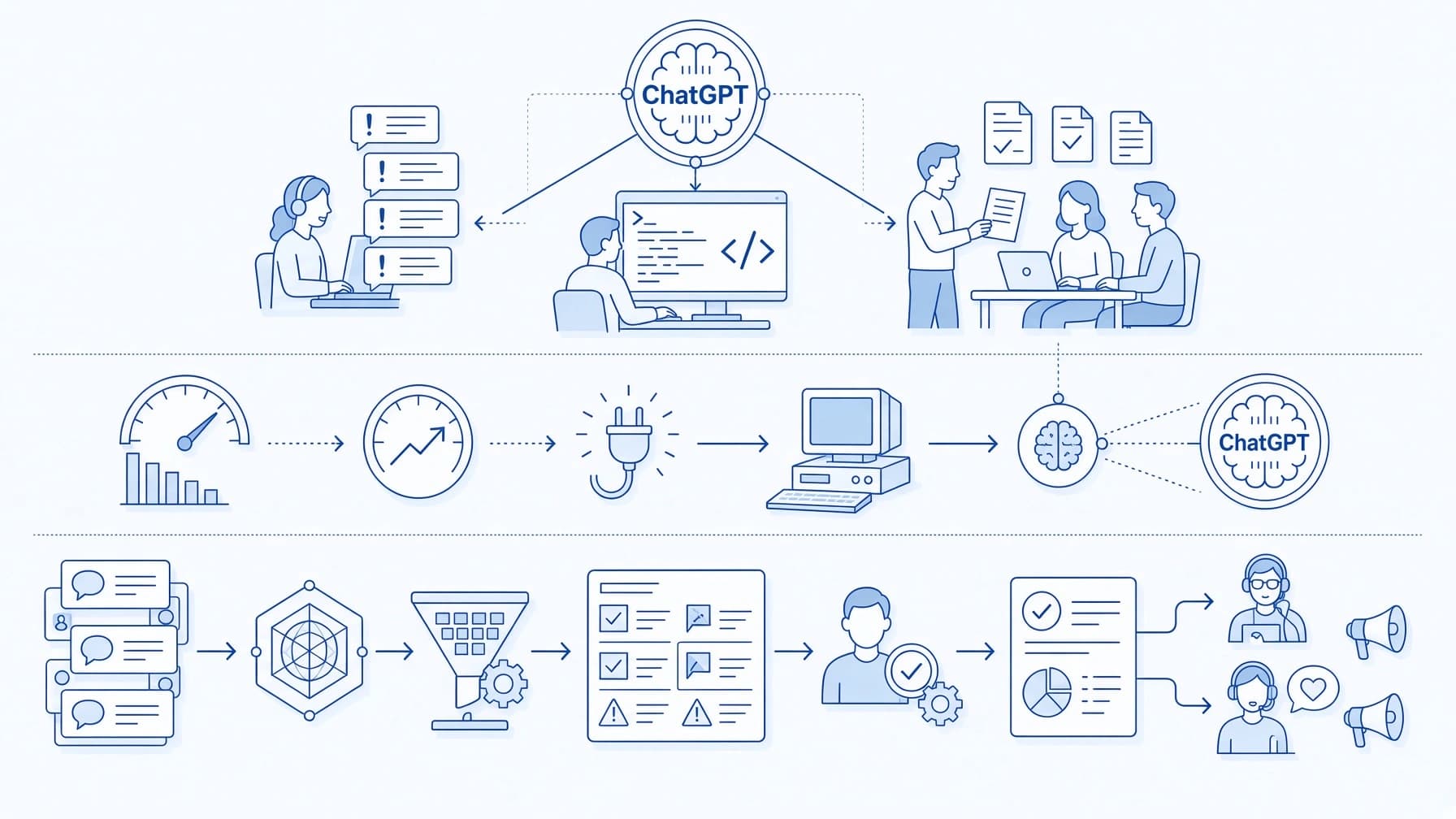
A customer support team can use ChatGPT to summarize recurring complaints. Developers can ask it to draft a function from written requirements used as an AI coding assistant, it can also suggest test cases for a developer to check. A training manager can adapt technical materials for employees with different experience levels.
These applications share a capability: processing supplied information and generating an output shaped by instructions. That flexibility allows similar models to support different occupations without building a separate AI system for every task. Each output still needs checks appropriate to its use.
Its underlying technology continues to improve
Progress involves capability, efficiency, and reliability. Can a model handle harder tasks, deliver useful results at lower cost, and follow instructions consistently?
Stanford’s 2025 AI Index reported that inference costs for models matching GPT-3.5’s performance on the MMLU benchmark fell more than 280-fold between November 2022 and October 2024. This measures an industry-wide efficiency gain, rather than a reduction in ChatGPT subscription prices.
Stanford University
Higher benchmark scores alone cannot establish reliability for a particular business process. Teams need to test representative inputs and measure errors alongside speed and cost.
It enables other products and processes
Complementary innovation happens when businesses connect model capabilities to their own inputs, rules, and subsequent actions. A feedback summary, for example, becomes more useful when it feeds a recurring reporting process.
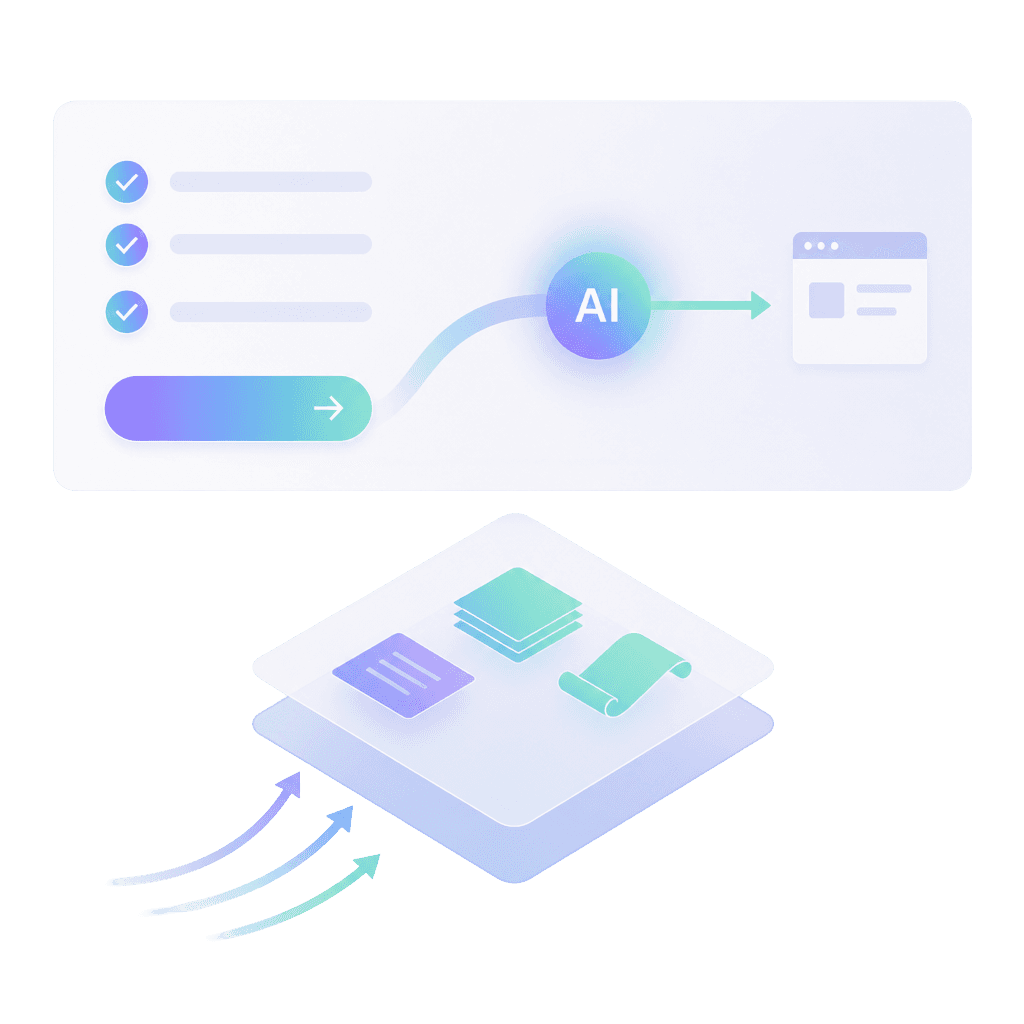
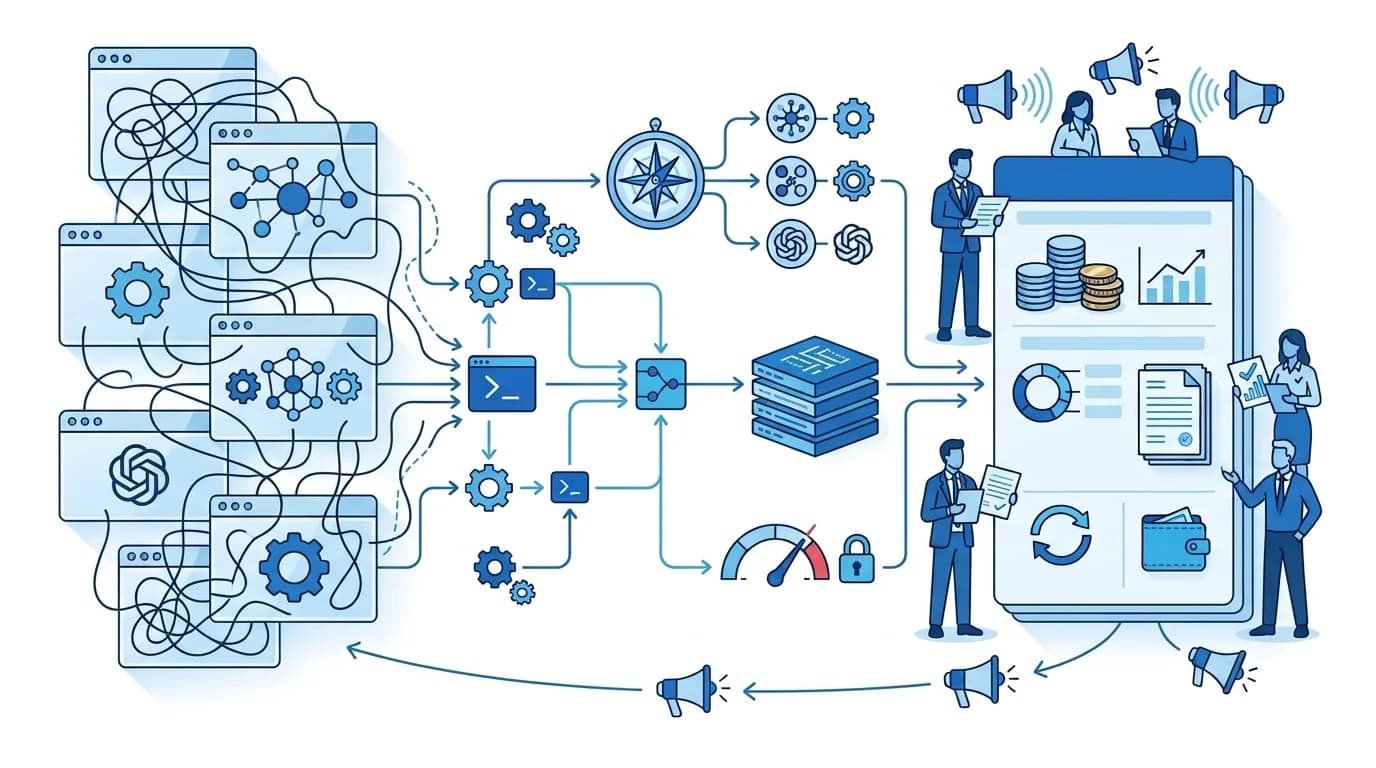
With ScriptRun’s AI workflow builder, teams can use a visual editor to connect model steps with API triggers, conditions, and webhooks. This provides a way to build repeatable processes around supported AI models, with business logic determining how information moves between steps.
What does the evidence actually show?
The evidence falls into three categories, each answering a different question.
Task-level improvements show whether AI helps people complete specific work faster or better. Early studies reported gains in writing, coding, and customer support. These findings support particular applications, but cannot establish that an entire organization becomes more productive.
Adoption across activities indicates how widely the technology is spreading. Using AI in several departments demonstrates reach; measuring the quality and cost of their output establishes value.
Market expectations concern future returns. In his May 2023 commentary, James Pethokoukis discussed Generative AI and Firm Values by Andrea Eisfeldt, Gregor Schubert, and Miao Ben Zhang. Their research examined stock returns around ChatGPT’s release, finding differences associated with firms’ exposure to generative AI. Those reactions reveal investor expectations, not proof that productivity gains had already occurred.
The OECD’s June 2025 assessment found considerable potential for generative AI to qualify as a general-purpose technology, while noting that productivity gains may take time to materialize.
Together, these findings strengthen the case for discussing ChatGPT as a general-purpose technology. They leave the scale and timing of its wider economic impact open.
Why widespread access does not guarantee business results
Giving a team access to ChatGPT is straightforward. Making it useful in a recurring process takes more work. The model needs relevant business context: what the task is for, which information matters, and what an acceptable result looks like.
Consider a weekly customer-feedback summary. Without clear categories or product context, AI may group unrelated complaints together or miss an issue that deserves attention. Producing that summary faster has limited value if someone spends just as long correcting it.
Disconnected systems add another cost. If employees still copy feedback into a chat, transfer the answer elsewhere, and rebuild the report manually, much of the original work remains.
A useful implementation starts with consistent inputs, a named owner, and a defined quality standard. For this summary, that might mean every reported theme includes supporting feedback and preserves important exceptions. Count review and correction time when evaluating the process. The relevant measure is how efficiently the team reaches a usable result.
Put ChatGPT general purpose technology to work with ScriptRun
Suppose your team receives hundreds of customer comments each week. Someone needs to identify recurring problems, preserve useful examples, and prepare a report that product and support teams can act on.
ScriptRun can connect the model step with incoming data and execution logic. Using its workflow API, visual editor, and conditions, you could build a customer-feedback analysis process around five steps:
Receive the feedback. Send a batch through the API, including comment IDs and relevant product context.
Define the classification task. Pass the text to a supported model with clear categories, instructions for ambiguous comments, and a required output format.
Generate a draft. Request recurring themes, supporting excerpts linked to comment IDs, and a summary. Instruct the model to flag uncertain classifications.
Check the result. Validate the format, then have a designated reviewer check whether categories fit and quoted excerpts support each theme.
Prepare the report. Pass the reviewed result into the team’s reporting process through an appropriately configured connection.
Human review belongs in the overall process, using your team’s chosen review tool or handoff. It should happen before the summary informs decisions.
This setup calls supported AI models through ScriptRun; it does not automate the ChatGPT website. The business value comes from connecting repeatable steps around the model.
Test a representative batch and measure review time, classification accuracy against human-checked examples, and total processing cost, including corrections and reruns. Compare those results with the existing process before expanding.
For LLM API cost optimization, compare models on the same feedback batch and choose the lowest-cost option that meets your accuracy standard.
Start with one process you can measure
The case for ChatGPT as a general-purpose technology points to broad potential. For your business, the useful next step is smaller: choose one recurring task with clear inputs and an output someone can evaluate.
Set a baseline for time, cost, and quality. Then explore a relevant scenario in the ScriptRun marketplace or build a small workflow around that task. Test it with representative inputs, including awkward cases, and account for review time. Expand once the results show the process is worth repeating.
Crie automações, conecte APIs e acesse mais de 50 modelos de IA em uma única plataforma.
Construtor visual de workflows
API compatível com OpenAI
Marketplace de workflows e templates
Comece grátis, planos a partir de $5
FAQ
Is ChatGPT general purpose technology or an application of one?
ChatGPT is more precisely an application of generative AI, the underlying technology economists assess as a potential general-purpose technology. Its varied uses illustrate that potential, but the economic classification concerns effects across industries beyond any single product.
Does GPT in ChatGPT stand for general purpose technology?
No. GPT in ChatGPT stands for Generative Pre-trained Transformer, referring to a family of AI models. Economists use the same abbreviation for general-purpose technology. The shared initials connect two separate concepts, which can make discussions confusing.
What are the three characteristics of a general purpose technology?
The three characteristics are widespread application, continued improvement, and complementary innovation. A technology must serve many activities, develop over time, and enable other inventions or processes. Simply performing several useful tasks does not establish its economy-wide significance.
How is ChatGPT general purpose technology different from artificial general intelligence?
General-purpose technology describes a technology’s economic reach and capacity to support innovation. Artificial general intelligence, or AGI, concerns broadly capable machine intelligence. Definitions of AGI vary, but a technology can have widespread economic uses without achieving it.
Why do economists compare generative AI with electricity?
Both can support many applications and enable businesses to reorganize work. The comparison highlights broad usefulness and complementary innovation. It does not imply that generative AI will follow electricity’s adoption timeline or produce economic gains of the same size.
How can ScriptRun help businesses apply general-purpose AI?
ScriptRun connects supported AI models with inputs and execution logic. Teams can build processes that classify feedback, generate summaries, or pass information between steps. Human review and clear evaluation criteria help determine whether the resulting process delivers value.
Do you need coding skills to create an AI workflow with ScriptRun?
No, not really. An applicable marketplace scenario can provide a starting point, while the visual editor supports building workflows. Custom API connections, data transformations, and more complex logic may require technical knowledge. Start with a task you can test.
Learn how to measure API latency, benchmark DeepL requests, investigate Discord delays, and improve AI API performance. Set realistic targets and test changes without overlooking reliability, output quality, or cost.
Compare 8 AI coding assistants by job, not hype: current 2026 pricing, agent features, privacy options and the limits vendors leave out of their pages.
Practical strategies for LLM API cost optimization. Learn how to reduce your cloud computing bills using dynamic model routing, context caching, and a unified enterprise billing platform.


 Archie